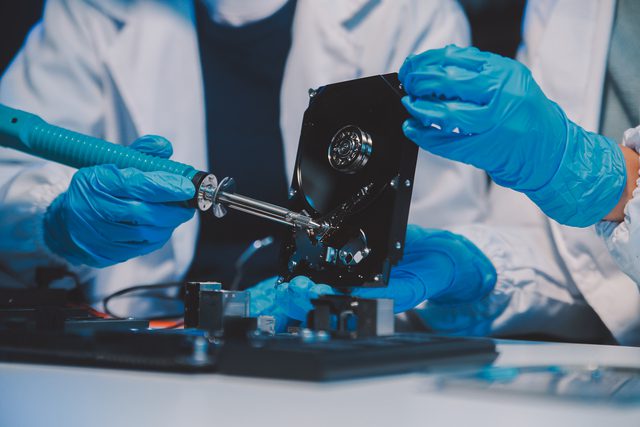
Data is one of the most valuable things a person or organisation can possess. Photographs that document years of family life, business records that represent thousands of hours of work, creative projects, financial documents, academic research — all of it lives on hard drives that are, in the end, mechanical and electronic devices subject to the same vulnerabilities as any other piece of hardware. When a Seagate hard drive fails, the experience can be alarming, disorienting, and genuinely distressing. The good news is that Seagate hard drive recovery is a well-established field with impressive success rates, and understanding the process, the options, and the best approach to take can make an enormous difference to the outcome.
Why Seagate Drives Are So Widely Used
Seagate is one of the world’s most recognised and widely used hard drive manufacturers, with decades of product development behind them and an enormous installed base of drives in use across laptops, desktop computers, external storage devices, network-attached storage systems, and enterprise servers. Their products span consumer and professional markets, and the sheer volume of Seagate drives in circulation means that when failures occur — as they inevitably do with any mechanical storage technology — the demand for specialist Seagate hard drive recovery expertise is consistently high.
The prevalence of Seagate drives also means that the failure modes specific to their product families are exceptionally well documented and understood by experienced recovery specialists. This is genuinely good news for anyone facing a drive failure, because it means that the professionals working on Seagate hard drive recovery have typically encountered the same or very similar problems many times before, and have developed the tools, techniques, and institutional knowledge to address them effectively.
Understanding Why Seagate Hard Drives Fail
Hard drive failure is rarely a single event with a single cause. It is more often the culmination of a process — sometimes gradual, sometimes sudden — that can originate in a range of different components and circumstances. Understanding the most common failure modes helps to explain both why drives fail and why professional Seagate hard drive recovery is so often successful.
Mechanical failure is perhaps the most dramatic category. Inside every traditional hard drive is a set of spinning platters coated with a magnetic recording surface, and a read and write head assembly that floats on a cushion of air just nanometres above those platters. When something disrupts this delicate relationship — whether through physical shock, component wear, or manufacturing variation — the result can be a head crash, where the read and write heads make contact with the platter surface. The characteristic clicking or grinding sound that many people associate with a dying hard drive is frequently the sound of this kind of mechanical failure, and it is a signal that the drive should be powered down immediately and professional Seagate hard drive recovery assistance sought without delay.
Firmware corruption is another common and often misunderstood failure mode. Seagate drives, like all modern hard drives, contain sophisticated onboard firmware that manages every aspect of the drive’s operation. When this firmware becomes corrupted — through a failed update, a power interruption at a critical moment, or component degradation — the drive may become unrecognisable to the operating system, appear to function but be unable to deliver data, or produce a range of error messages that can easily be misinterpreted as hardware failure when the underlying issue is logical rather than physical.
Electronic failure — typically involving the printed circuit board that controls the drive’s electronics — is another category that Seagate hard drive recovery specialists encounter regularly. Power surges, electrical faults, and component failure can all render a drive non-functional at the electronic level while leaving the platters and their recorded data entirely intact. This is an important point: an electronically failed drive is not necessarily a drive with lost data. It is a drive with a damaged delivery mechanism, and in skilled hands, the data itself is frequently recoverable.
Logical failure, where the drive’s physical components are functional but the data structures that organise and locate files have become corrupted or deleted, represents a further category. Accidental deletion, partition corruption, file system errors, and failed formatting operations all fall into this category, and Seagate hard drive recovery at the logical level is generally among the most straightforward and successful forms of data recovery work.
Why Professional Recovery Is the Right Choice
When a hard drive fails, the temptation to attempt a DIY solution is understandable. Free and paid recovery software is widely available, and the appeal of a quick, inexpensive fix is obvious. However, the decision to attempt software-based recovery on a physically failing drive — or to open a drive outside of a controlled environment — carries significant risks that can permanently compromise the chances of a successful outcome.
Hard drive platters are extraordinarily sensitive surfaces. Even microscopic contamination — a single dust particle — can cause additional damage when a drive with compromised heads is powered up in an uncontrolled environment. Specialist Seagate hard drive recovery facilities operate in cleanroom conditions precisely because the internal components of a hard drive demand that level of environmental control. Attempting to open or operate a mechanically compromised drive outside of a cleanroom is one of the most reliable ways to transform a recoverable situation into an unrecoverable one.
Software recovery tools have their place — they can be effective for logical failures where the drive’s physical components are fully functional — but they are entirely inadequate for mechanical, electronic, or firmware failures, and using them on a physically compromised drive can overwrite the very data structures that a professional recovery would use to reconstruct lost files. The general principle is straightforward: if a drive is making unusual noises, is not being recognised, or has suffered physical trauma, professional Seagate hard drive recovery is the appropriate first step, not a last resort.
What to Expect From the Recovery Process
The process of professional Seagate hard drive recovery typically begins with a thorough diagnostic assessment. This establishes the nature and extent of the failure, identifies which components have been affected, and provides the basis for a realistic assessment of what can be recovered and at what cost. Reputable recovery specialists will provide this assessment before any commitment to proceed, allowing the customer to make an informed decision about how to proceed based on accurate information.
For mechanical failures, the recovery work takes place in a cleanroom environment where the drive can be opened, inspected, and if necessary have its read and write heads replaced with compatible components sourced from donor drives. This requires not only the physical components but the technical expertise to perform delicate operations on hardware that has no margin for error. Firmware issues require specialist tools and the specific technical knowledge of Seagate drive architectures that experienced recovery professionals accumulate over years of focused work in this area.
Throughout the process, the integrity of the recovered data is the primary concern. Professional Seagate hard drive recovery specialists work to create an image of the recovered data before any reconstruction work is attempted, ensuring that the original drive is not subjected to unnecessary additional stress and that the recovery process itself does not introduce further risk.
Protecting Yourself in the Future
Successful Seagate hard drive recovery, while genuinely impressive in what it can achieve, is always preferable to avoid entirely. The most effective protection against data loss is a robust and consistently maintained backup strategy. The widely recommended approach of maintaining multiple copies of important data — including at least one copy stored off-site or in cloud storage — means that even a total and unrecoverable drive failure does not result in permanent data loss. External drives, cloud services, and network storage all have roles to play in a comprehensive backup approach.
That said, backups are not always in place when failures occur, and even organisations with backup policies sometimes discover that their most recent backup is less current than they assumed. In these situations, the capability and success rates of modern Seagate hard drive recovery mean that the situation is rarely as hopeless as it initially feels. The technology and expertise available to recovery specialists today is remarkable, and the proportion of cases where meaningful data recovery is achieved is genuinely encouraging.
For anyone facing a Seagate drive failure, the message is a positive one: act quickly, avoid further use of the drive, and place it in the hands of experienced professionals. Seagate hard drive recovery has never been more capable, and the data you thought was lost may well be closer to hand than you think.
Get in Touch:
Disk Doctors Data Recovery
76 Watling St, London EC4M 9BJ
020 3086 9512
diskdoctorsdatarecovery.co.uk